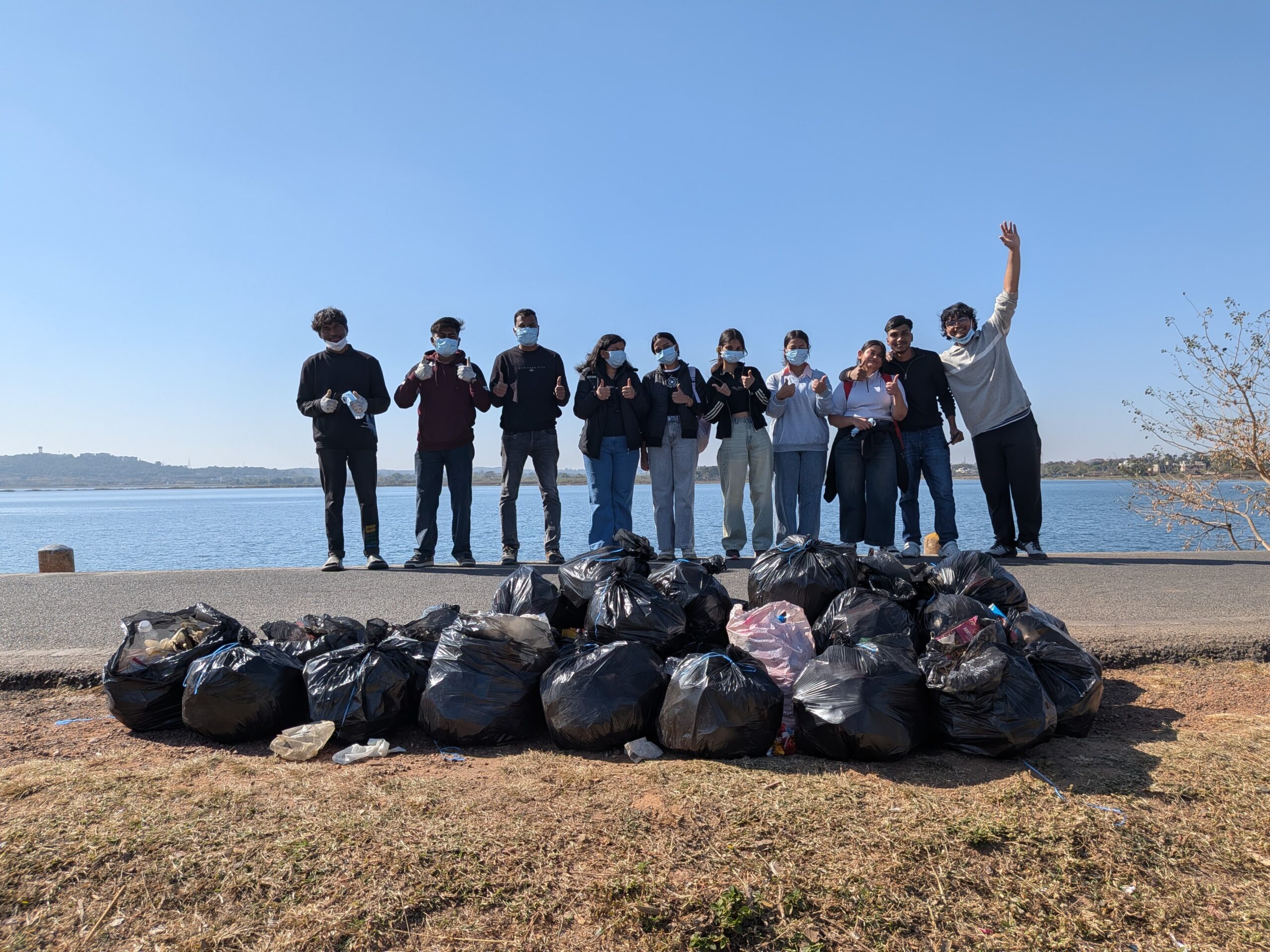
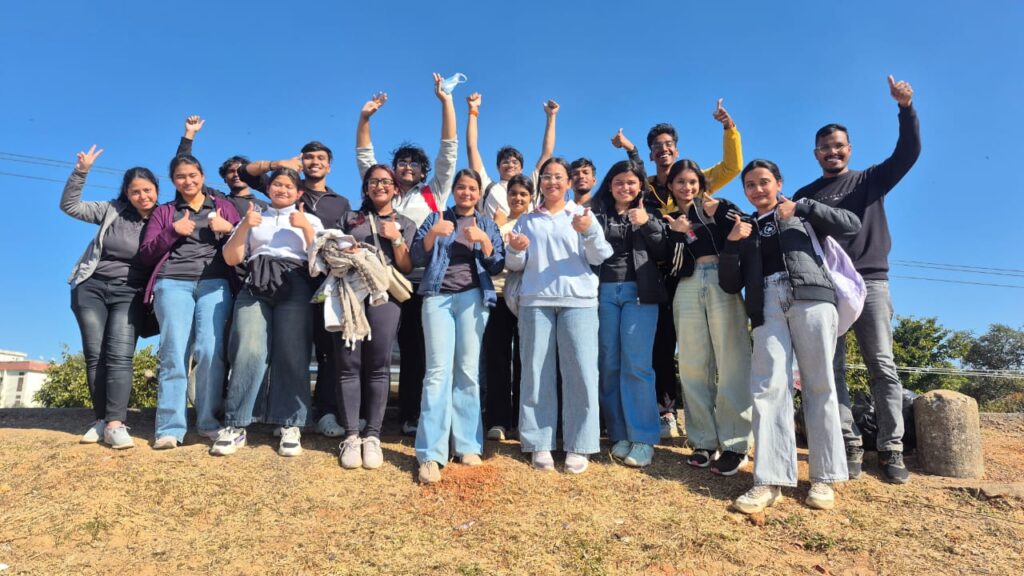
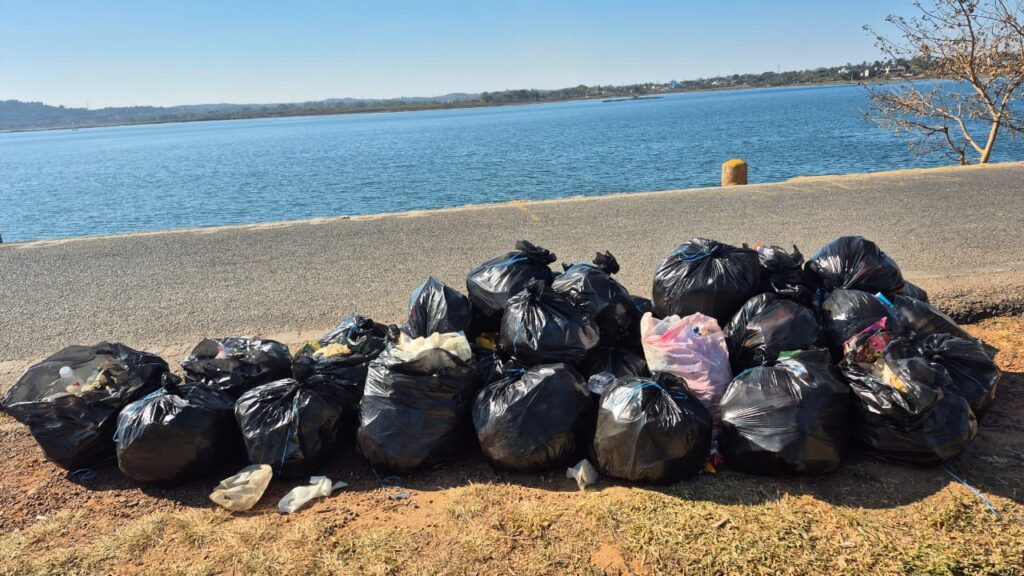
A cleanliness drive conducted by the Wake Up India Foundation at Dhurwa Dam in Ranchi has brought to light the growing problem of poor civic sense and unchecked littering at public and tourist locations.
According to members of the organization, the initiative was planned as a routine cleanliness activity aimed at maintaining the ecological and visual integrity of the popular tourist spot. However, what volunteers encountered on the ground was far more disturbing than anticipated. The area surrounding the dam was strewn with empty chips packets, alcohol bottles, pan masala pouches, plastic waste, paper, and other non-biodegradable material.
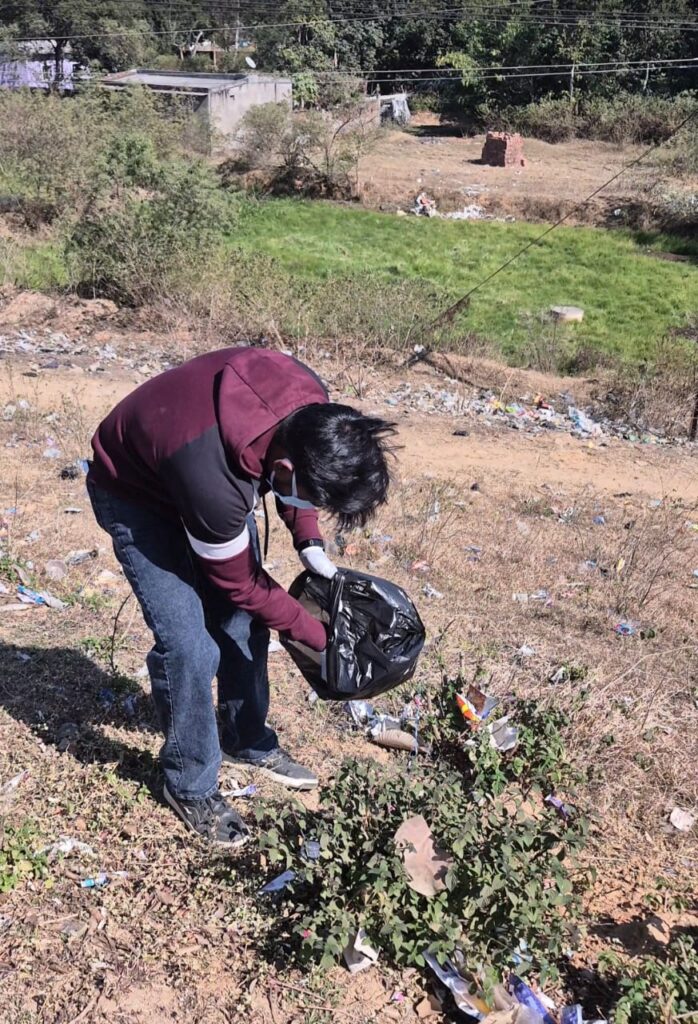
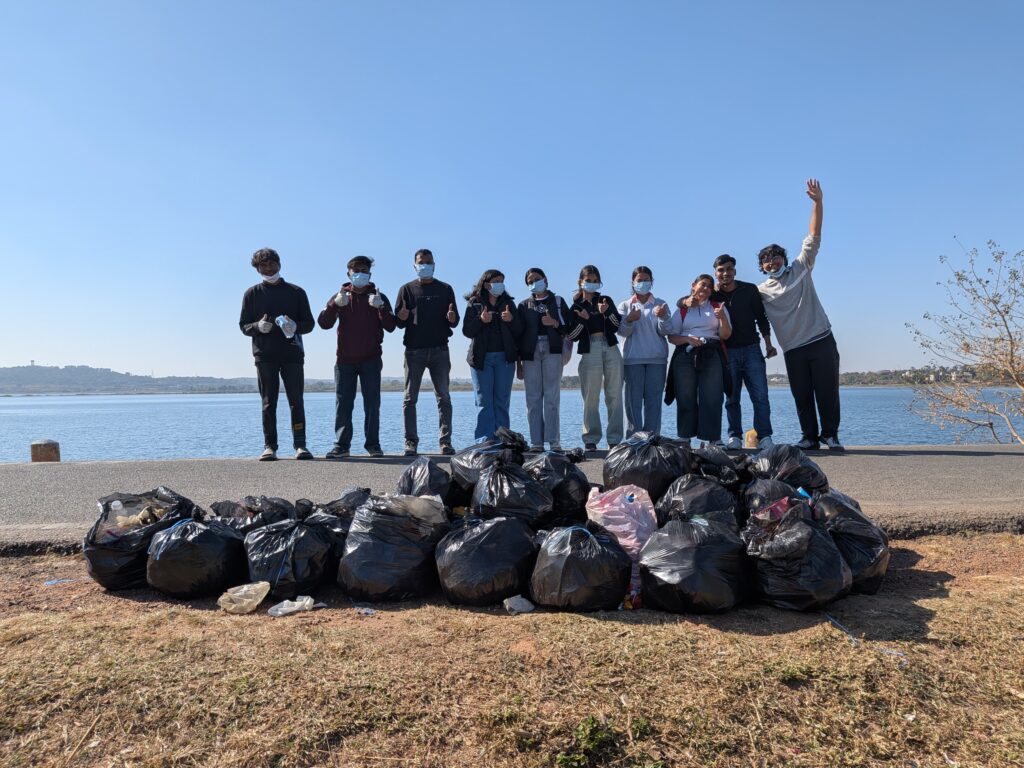
Volunteers reported that the site resembled a dumping zone rather than a recreational or natural space meant for public enjoyment. “This was clearly not garbage accumulated over a day or two,” members of the foundation stated. “It reflected years of neglect and a deeply ingrained ‘it’s okay’ attitude toward public spaces.”
The organization emphasized that while India frequently discusses development, national strength, and global recognition, basic civic sense often remains overlooked. The drive highlighted a larger issue—citizens continuing to treat cleanliness as someone else’s responsibility, rather than a shared and personal duty.
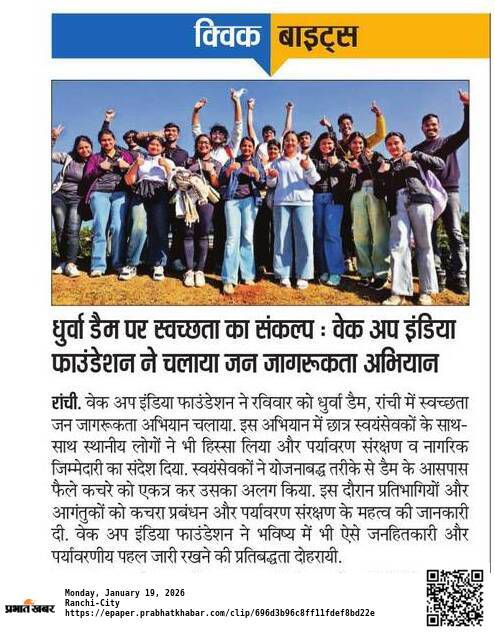
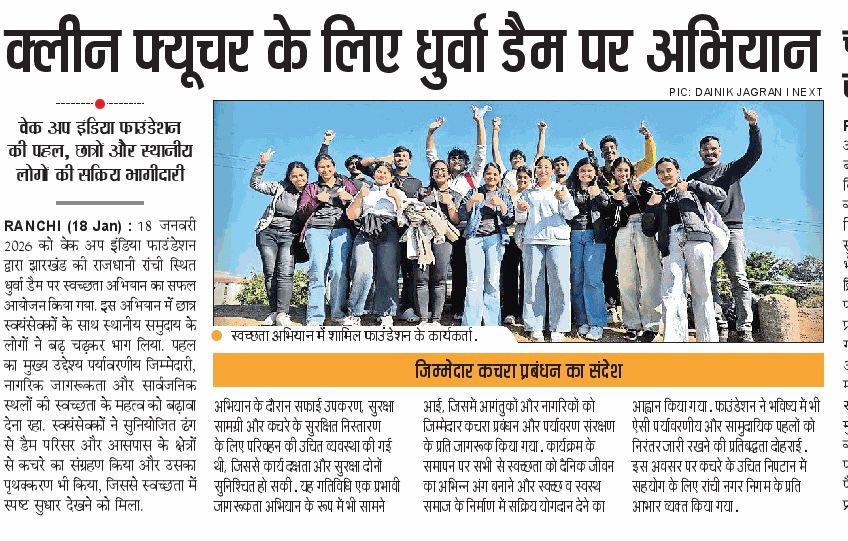
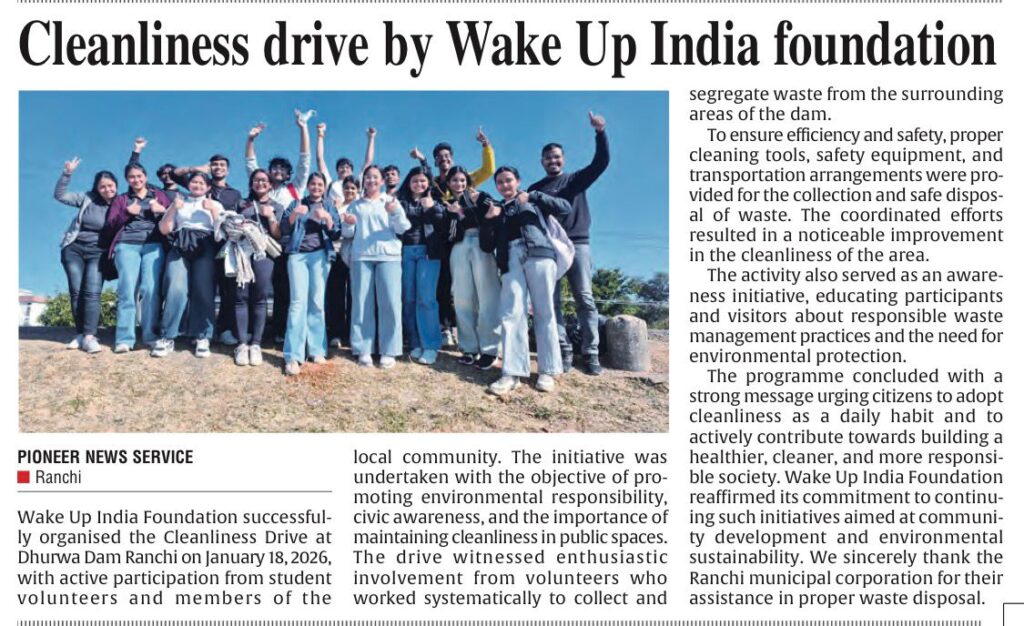
Activists involved in the campaign pointed out a recurring pattern: people litter freely in public spaces while expecting authorities to maintain cleanliness. “We create the mess and then blame the system,” a volunteer remarked. “What is missing is accountability at the individual level.”
Wake Up India Foundation reiterated that cleanliness should not be seen merely as a government-led campaign or a symbolic one-day event. Instead, it must be practiced daily through conscious behavior and personal discipline. The organization stressed that sustainable change can only come when citizens take responsibility for the waste they generate.
Concluding the drive, the foundation appealed to the public to rethink their habits and recognize that meaningful national progress begins with small but consistent actions. As volunteers noted, improving the country’s condition starts with a simple step—ensuring that one does not add to the problem.
The drive at Dhurwa Dam serves as a reminder that before a nation can change, the habits of its people must change first.


